
Marek Laskowski
Chief Information Officer at DZP
Three questions on Taking Charge: who stays in charge of the work, its value, and the data it runs on.
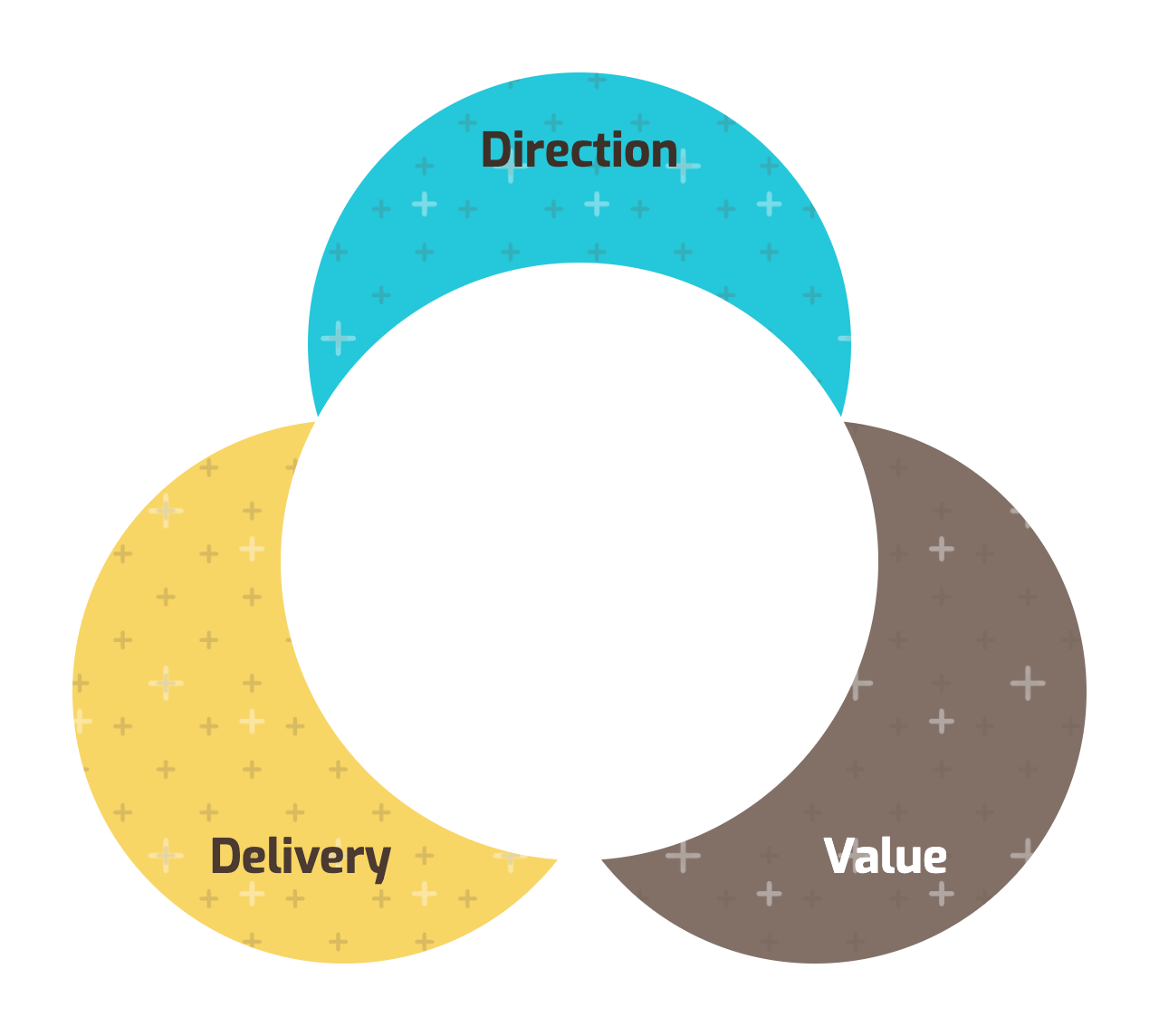

Our theme for Lexpo'27 is Taking Charge: direction, delivery and value. As legal technology moves from promising to delivering, the question becomes who stays in charge of the work, its value, and the data it runs on. We put three questions to Marek Laskowski, Chief Information Officer of DZP, one of Poland's largest law firms.

You have been running AI in production at DZP for almost three years. Where have the systems proved more reliable than you expected, and where did they fall short in ways that only became visible later?
Based on several years of hands-on experience, legal AI systems have proven excellent, especially in tasks that require deep analysis of information drawn from very large volumes of documents. Typical examples include due diligence, analysis of witness statements and litigation materials in disputes, and legal research more broadly. In the early days of AI entering the market, these processes carried a significant risk of hallucination; today, hallucinations occur only marginally.
The second phase of AI development is agentic solutions: mechanisms that enable complex, multi-step tasks to be performed semi-automatically, and sometimes fully automatically. Rather than simply answering questions, an agent takes concrete action across many areas in a way that increasingly resembles how a person would work. This is currently the dominant direction of AI development in the legal sector and beyond, and AI agents are becoming steadily more capable. Things that were completely out of reach just a year ago are becoming reality today.
As for weaknesses, these solutions are still clearly weaker at numerical data analysis and any calculations based on spreadsheets. AI systems generally still struggle with mathematics. That said, the range of tasks still beyond their reach keeps shrinking, and these are, after all, tools we have only had for a relatively short time.

You decide which parts of the firm's operations can be handed to an AI agent next. What has to be true before you say yes?
We will keep handing more and more work to AI agents, and that trend is growing exponentially. The next stage, already underway in practice at DZP, is entrusting agents with back-office processes, such as completing timesheets or automating the proposal process.
The essential precondition for allowing additional AI agents to operate within the organization is building a secure environment in which they can work. By secure, I mean an environment in which we consciously manage agents' permissions, know exactly what they are allowed to do and what we deliberately restrict them from doing, and know where our data and our clients' data goes and what happens to it at every stage of the process. Building a deliberate AI security architecture is absolutely critical and ultimately builds an organization's trust in using AI tools.
Things that were completely out of reach just a year ago are becoming reality today.
Marek Laskowski, DZP

When a vendor tells you their system is safe, what is the question they most often struggle to answer?
AI vendors paint an impressive picture of excellence, including on cost and safety. Unfortunately, when we ask about the technical details of their IT architecture, particularly regarding security, it turns out that they either do not know the answers or have only superficial knowledge. I am thinking here of areas such as the cryptography applied to data, and how that data is stored and transmitted.
On top of that, vendors are currently shifting their licensing models for AI solutions away from a per-user license towards payment based on token consumption. For clients, the token-based model is very difficult to plan for financially because it provides no precise indication of the final cost. Vendors are themselves billed by the underlying LLM providers based on token usage, so they naturally want to pass those costs on to clients. This creates friction in negotiations, reflecting the underlying difference in interests between buyer and vendor.
About Marek
Marek Laskowski is Chief Information Officer at DZP, one of Poland's largest law firms, and has led technology for 20 years in organisations where security and accountability are non-negotiable. For close to three years he has been running AI in production at DZP, from Legora in core legal work to a growing set of agentic deployments, and he decides which parts of the firm's operations are safe to hand to an AI agent next. A CIO Diamond laureate, he speaks internationally on legal AI and cyber resilience and lectures at Kozminski University.
Continue the conversation at Lexpo'27
15 and 16 March 2027, Haarlem (near Amsterdam)